
Teeth Whitening in Brookline, MA
Bringing You a Gleaming, More Confident Smile
Why Choose Boston Smile Center for Teeth Whitening?

Who Is a Good Candidate for Teeth Whitening?

How Does Teeth Whitening Work?

Tips for Maintaining Your Brighter Smile
Understanding the Cost of Teeth Whitening
Read More
Factors That Affect the Cost of Teeth Whitening
While whitening is generally priced as a single flat fee for each treatment type, a few factors can influence whether you need additional sessions or preparatory care:
- Severity of staining — Mild, surface-level staining typically responds quickly, while deeper or longer-standing discoloration may require more treatment time to achieve your desired outcome.
- Type of staining — Extrinsic stains from food and beverages respond best to bleaching. Intrinsic staining from medications, fluorosis, or aging within the tooth itself is more resistant, and in those cases we may discuss whether veneers would be a more effective path.
- Condition of your teeth and gums — If restorative care is needed first, such as addressing a cavity or gum inflammation, that will be factored into your overall treatment plan.
Types of Teeth Whitening and What They Cost
Professional whitening at a dental office consistently outperforms anything available at a drugstore. Here is how the options compare:
- In-office whitening — Typically ranges from $400 to $800 and delivers up to eight shades of improvement in a single appointment.
- Take-home whitening kit (dentist-provided) — Custom trays and professional-grade gel, generally priced at several hundred dollars, with results over about two weeks and easy touch-up capability going forward.
- Over-the-counter kits — Generic trays and diluted bleaching agents available for $100 or less. Results are minimal and uneven.
- Whitening strips and gels — The least expensive option at $20 to $40 per box, but they require weeks of repeated use and often leave behind uneven coloration near the gumline.
Professional vs. Over-the-Counter Whitening
The core difference is concentration and customization. Professional-grade whitening agents used at Boston Smile Center penetrate enamel more effectively than anything available over the counter. Custom-fitted trays ensure the gel reaches every surface evenly — a critical factor for natural-looking results. Store-bought products use generic trays and lower-concentration bleaching agents, which is why their results are often patchy and short-lived. For patients who have invested in their health and want results worth seeing, professional whitening is the more sensible choice.
Making Whitening Affordable
Dental insurance does not cover teeth whitening, as it is considered a cosmetic procedure. However, Boston Smile Center works with CareCredit, a third-party financing partner, to offer flexible monthly payment plans. Our team is happy to walk you through your options so cost does not stand between you and a smile you feel confident about. To get a specific estimate, schedule a consultation with our office.
Teeth Whitening FAQs
Does Teeth Whitening Hurt?
Most patients experience little to no discomfort during professional whitening. Before treatment begins, our team protects your gums and soft tissue from direct contact with the whitening gel. The gel itself is formulated for clinical use and is far less abrasive than many over-the-counter options. Some patients with naturally sensitive teeth may notice mild sensitivity in the hours following treatment, but this is typically brief. If you have a history of sensitivity, let us know before we begin — we can adjust the concentration of the gel, space out your sessions, or recommend a sensitivity-reducing toothpaste in the days leading up to your appointment.
Does Teeth Whitening Damage Enamel?
In reality, no – teeth whitening gel doesn’t damage healthy enamel. The material shouldn’t erode the top layers of your pearly whites.
That said, things change if your teeth are compromised. Whitening gel causes issues for teeth affected by decay or gum disease. For that reason, you simply must get a dental exam before treatment.
At-home whiteners are also risky for smiles. Those like activated charcoal are abrasive and can wear away your enamel. You thus shouldn’t use them to fix discoloration.
Ultimately, it’s best to consult a dentist before you try whitening. They’ll let you know if treatment suits you. Even if you decide against it, they can provide hygiene tips that brighten your grin safely.
Does Teeth Whitening Work on Dental Crowns?
Sadly, dental crowns can’t be whitened like natural teeth can. A dentist’s whitening treatment won’t have any effect on them.
It all comes down to how whitening works. Usually, it uses bleaching gel to remove stains from enamel. However, this gel can’t seep into a crown’s nonporous material. That means it won’t brighten crowned areas. Worse yet, the gel could weaken the bond between your tooth and restoration.
Still, not all hope is lost. You can avoid crown stains with good oral habits – twice-daily brushing, not smoking, etc. Furthermore, you could replace a poorly shaded crown with a new one.
What’s the Difference Between Professional and Store-Bought Teeth Whitening?
Both professional and store-bought whiteners try to fix tooth stains. Regardless, though, this common purpose is their only similarity. The two whitening options rely on very different approaches.
On the one hand, store-bought whitening is generic. It uses one-size-fits-all trays and weak brighteners. That being the case, it isn’t very good at brightening grins. In fact, it usually leaves teeth with few (if any) changes.
In contrast, pro whitening is customized for each patient’s smile. It accounts for your current oral health and existing restorations. As such, the treatment always provides high-quality and safe results. You’re sure to get noticeably whiter teeth by the end of it.
Is Teeth Whitening Permanent?
With professional whitening, many patients maintain noticeably brighter results for anywhere from six months to well over a year. The range depends on dietary habits, oral hygiene consistency, and lifestyle factors like tobacco use. Patients who limit their intake of dark-colored foods and beverages, brush twice daily, and come in for their routine cleanings tend to see results persist longer. Our team can also set you up with a touch-up kit so you can maintain your results at home without needing to start over from scratch.
How Long Does Teeth Whitening Treatment Take?
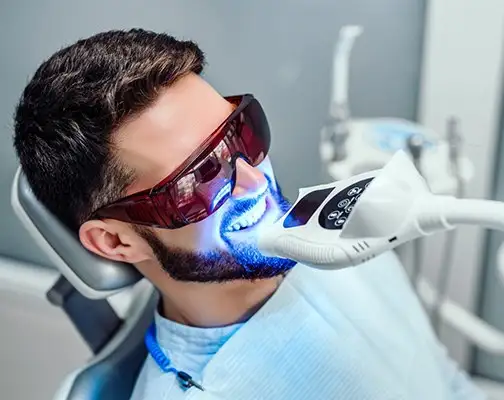
Usually, take-home whitening kits take about two weeks of consistent use. In-office treatments, on the other hand, are much quicker; they can lighten your teeth by up to eight shades in an hour! That’s why patients who have a wedding, family reunion, job interview, or another important event rapidly approaching often choose an in-office treatment.
Important note: In some cases, restorative care is needed beforehand. If that’s the case for you, then it’s possible for a few weeks or months to be added to the front-end of your treatment plan. For that reason, we recommend coming in for your initial consultation sooner rather than later.
Are There Any Foods I Need to Avoid After Whitening My Teeth?
One of the leading causes of dental discoloration is dark-colored foods, like blackberries, soy sauce, and balsamic glaze. So, we recommend avoiding these following your teeth whitening treatment. Instead, do your best to stick to light-colored foods that are also smile-friendly, like oatmeal, plain yogurt, and bananas. That way, your teeth stay white, and your enamel stays healthy!
Are There Any Drinks I Need to Avoid After Whitening My Teeth?
Speaking of things that discolor your teeth, beverages like coffee, wine, and soda certainly make the list. That’s why we recommend steering clear of them, especially immediately following your whitening treatment. When you do get the green light to incorporate these back into your diet, make sure to use a straw, rinse your mouth with clean water afterward, and brush your teeth about 20 minutes later.
Does Dental Insurance Cover Teeth Whitening?
Although having dental insurance will help you save on preventive and restorative care, it doesn’t typically cover services that aren’t medically necessary, like teeth whitening. Don’t worry though – we have another financial solution available: flexible financing. So, if you are interested in whitening your teeth but you want to learn how to make the price more affordable, don’t hesitate to reach out to our Brookline dental team so we can provide you with details on CareCredit.
Meet the Dentist Behind Your Whitening Treatment
Professional teeth whitening at Boston Smile Center is overseen by an experienced, credentialed cosmetic dentist, so you can feel confident your smile is in expert hands.
Medically reviewed by Alan Sasson, DDS
Dr. Alan Sasson
Cosmetic, Restorative, and Implant Dentist
Dr. Sasson has been a Brookline mainstay for over 35 years. He earned his dental degree from the Goldman School of Graduate Dentistry at Boston University and holds a certification in Oral Implantology from Brookdale Hospital in New York. He has held faculty appointments at the Harvard School of Dental Medicine, the Forsythe Institute, and the Medical Research Foundation of Boston, and he is a past president of the Brookline Dental Society, the Boston Dental Collaborative, and the Boston Society for Dental Esthetics. Boston Magazine has honored him in its Best of Boston issue for cosmetic dentistry on more than one occasion.
Request an Appointment
"*" indicates required fields