
Dental Bridges in Brookline, MA
Get Rid of the Gap
A missing tooth can quietly change everything. It shifts the way you chew, gradually causes neighboring teeth to drift, and can age the appearance of your smile in ways that feel hard to explain but impossible to ignore. For adults who have lived with a gap in their smile, whether for months or years, the impact goes well beyond cosmetics. It affects confidence, comfort, and even long-term oral health.
At Boston Smile Center, we understand how meaningful it is to have a complete, functional smile. Serving the Brookline and Greater Boston area for over 35 years, Dr. Alan Sasson brings together time-tested expertise and the latest dental technology to deliver restorations that look natural and stand the test of time. For patients dealing with one or a few missing teeth, dental bridges remain one of the most trusted solutions available. If you are exploring your options for replacing missing teeth, understanding how dental bridges work is a great place to start.
Why Choose BOSTON SMILE CENTER for Dental Bridges?

What Is a Dental Bridge
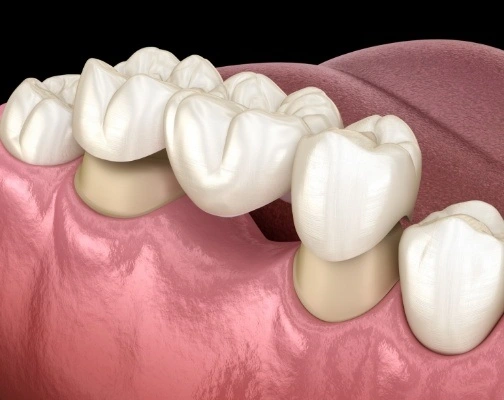
A dental bridge is a permanent, fixed restoration used to close the gap created by one or more missing teeth. This restoration features artificial teeth, known as pontics, held securely by crowns placed on the natural anchor teeth on both sides of the space. The outcome is a stable, seamless solution that completely restores your ability to chew, speak, and smile confidently.
Bridges are fabricated from a range of materials, including porcelain, ceramic, metal, or a combination, depending on the area of the missing tooth and your aesthetic goals. Porcelain and all-ceramic options are especially popular for their ability to closely mimic the color and translucency of natural teeth, making the restoration virtually indistinguishable from the surrounding smile.
Types of dental bridges
There are several types of dental bridges, and the right choice depends on your specific anatomy and needs. At Boston Smile Center, we take time to evaluate each patient individually before recommending a restoration approach.
The most common types include:
- Traditional bridge: Anchors onto the two natural teeth bordering the gap, with the pontic suspended in between
- Cantilever bridge: Anchored on only one adjacent tooth, used when there is only one natural tooth next to the gap
- Maryland bridge: Uses a metal or porcelain framework connected to the back of neighboring teeth, requiring less alteration to surrounding teeth.
- Implant-supported bridge: Anchored by dental implants rather than natural teeth, offering exceptional stability for multiple missing teeth
We will assist you in determining the best choice for your long-term goals, taking into account your bone structure and overall oral health.
The Dental Bridge Process
Getting a dental bridge takes place over two appointments. During the first visit, Dr. Sasson prepares the abutment teeth, which involves reshaping them slightly to accommodate the crowns that will anchor the bridge. Impressions are taken and sent to a dental lab, where your custom restoration is prepared to match the size, shape, and shade of your teeth. A temporary bridge is placed in the meantime to protect the prepared teeth.
At the second appointment, the permanent bridge is fitted, adjusted for bite and comfort, and bonded into place. Thanks to our advanced dental technology, we are able to achieve impressions and fittings with exceptional precision, reducing the need for numerous adjustments and ensuring a comfortable result from the start.
Why Replacing a Missing Tooth Matters
It is easy to delay treatment for a missing tooth, particularly if it is not in a visible area. However, the consequences of leaving a gap untreated can compound over time. When a tooth is lost, the jawbone beneath it no longer receives the stimulation it needs and begins to resorb. Neighboring teeth can shift toward the open space, and opposing teeth may begin to drift as well, disrupting your bite alignment and increasing the risk of additional tooth loss.
Restorative dentistry solutions like dental bridges address these concerns by maintaining proper spacing and preserving the structural integrity of your smile. Addressing a missing tooth proactively is one of the most impactful decisions you can make for your long-term oral health.
Caring for Your Dental Bridge
A dental bridge, when properly cared for, can last many years and continue to look and function beautifully. The key is maintaining a consistent oral hygiene routine that accounts for the bridge structure. Because the pontic sits above the gumline rather than being rooted in the bone, food particles and plaque can accumulate beneath and around it if not cleaned carefully.
Flossing under the bridge using a floss threader or water flosser, brushing twice daily, and staying current with professional cleanings are all essential habits for prolonging the life of your restoration. The American Dental Association offers additional guidance on caring for bridges. During your appointments at Boston Smile Center, our hygiene team will walk you through the best techniques to keep your bridge healthy and your surrounding gum tissue in excellent condition.
Choose Boston Smile Center for Your Dental Bridge
Boston Smile Center has been a trusted name in Brookline and the Greater Boston area for over three decades, and our commitment to exceptional care has earned us Best of Boston recognition year after year. Dr. Sasson’s philosophy has always been patient-first, combining the precision of modern dentistry with the warmth of a practice where every patient is known by name. Whether you are exploring a traditional bridge or curious about how an implant-supported option might compare, Dr. Sasson and our team take the time to ensure you fully understand your choices before moving forward. You can learn more about Dr. Sasson’s background and approach by visiting his provider profile.
We accept various dental insurance plans, including Delta Dental PPO, Aetna, Cigna, Blue Cross Blue Shield, and Guardian, and we also offer flexible financing options, including CareCredit and in-house payment plans, to make quality care accessible. If you are ready to restore your smile with a dental bridge, we invite you to contact our office to schedule your consultation.
Dental Bridge FAQs
Request an Appointment
"*" indicates required fields